Leadgene Leadgene
NADH Oxidase
More Images
Catalog Number

LDG0038RG

More Documents
Loading package & price...
  • Overview

    Description

    NADH Oxidase is a flavoprotein enzyme that catalyzes the oxidation of NADH to NAD⁺, coupled with the reduction of molecular oxygen (O₂) to either hydrogen peroxide (H₂O₂) or water (H₂O), depending on the enzyme source and reaction conditions. This enzyme plays a key role in redox homeostasis and regenerating NAD⁺ for metabolic processes such as glycolysis and fermentation.
  • Specifications
    • Expression System

      Escherichia coli

      Detection Method

      Spectrophotometry

    • Concentration

      200 U/mg or more

      Activity

      Activity can be calculated by using the following formula:
      Volume activity (U/mL) =ΔOD/min (ΔOD test−ΔOD blank) × df/ 1.0×Vs = ΔOD/min × 20 × df

      Weight activity (U/mg) = (U/mL) × 1/C
      Vs: Sample volume (0.05 mL)
      1.0: Unit absorbance at 600 nm due to unit definition
      df: Dilution factor
      C: Enzyme concentration in dissolution (mg/mL)

    • Unit Definition

      One unit causes decrease in DCPIP by one unit of absorbance (1.0) per minute under the following conditions:27 mM Tris-HCl pH 7.5, 0.2 mM NADH, 40 μM DCPIP and 33 μg/mL BSA.

      Form

      Lyophilized

  • Background
    • Synonyms

      NADH Oxidase, NADH:oxygen oxidoreductase, NADH oxidizing enzyme, DPNH oxidase, H₂O₂-forming NADH oxidase, FAD-NADH oxidase, Flavoprotein oxidase, NADH oxygen oxidoreductase, NADH oxidoreductase (oxygen), NADH H₂O₂ oxidase, NADH diaphorase, EC 1.6.3.x oxidase, NADH regeneration enzyme, Redox flavoenzyme

  • Instruction
    • Reconstitution

      It is recommended to weigh and reconstitute 10 mg of lyophilized powder in 200 μL double-distilled water directly and incubate the solution for at least 10 mins to ensure sufficient re-dissolved.

      Shipping

      The product is shipped with polar packs. Upon receipt, store it immediately at -20°C or lower for long term storage.

    • Stability & Storage

      This product is stable at -20°C for long-term storage under sterile conditions.
      Avoid repeated free-thaw cycles.

  • Image
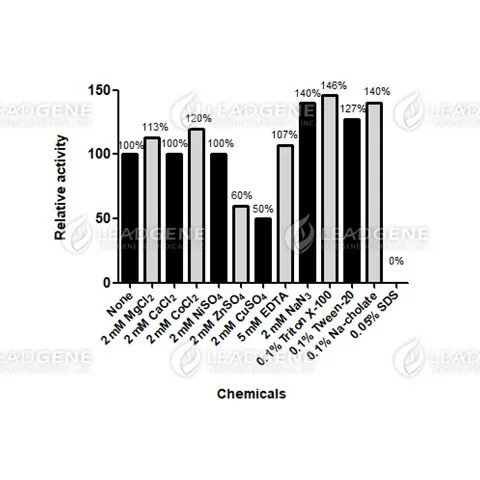
    The effects of various chemicals on NADH Oxidase. The enzyme was incubated with the chemicals at 25°C for 1 hour.

    The effects of various chemicals on NADH Oxidase.
    The enzyme was incubated with the chemicals at 25°C for 1 hour.

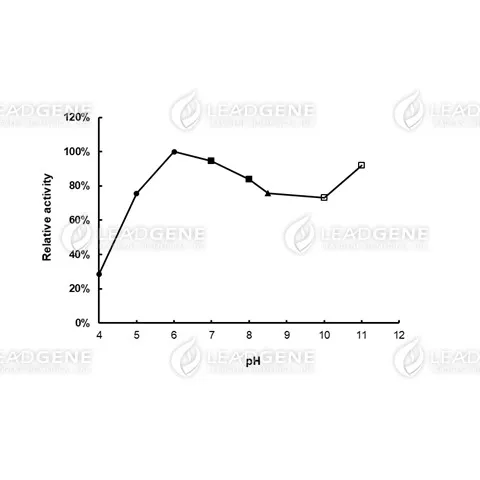
    pH stability of NADH Oxidase. The enzyme powder was reconstituted by double-distilled water and treated with different pH buffer condition for 3 hours at 30°C. pH 4.0-6.0, 0.1 M Sodium citrate buffer; pH 7.0-8.0, 0.1 M Potassium phosphate buffer; pH 8.5, 0.1 M Tris-HCl buffer; pH 10.0-11.0, 0.1 M Carbonate-bicarbonate buffer.

    pH stability of NADH Oxidase.
    The enzyme powder was reconstituted by double-distilled water and treated with different pH buffer condition for 3 hours at 30°C. pH 4.0-6.0, 0.1 M Sodium citrate buffer; pH 7.0-8.0, 0.1 M Potassium phosphate buffer; pH 8.5, 0.1 M Tris-HCl buffer; pH 10.0-11.0, 0.1 M Carbonate-bicarbonate buffer.

    Thermal stability of NADH Oxidase. The enzyme powder was reconstituted by double-distilled water and treated with different temperatures for 30 minutes. Final concentration: 20 U/mL

    Thermal stability of NADH Oxidase.
    The enzyme powder was reconstituted by double-distilled water and treated with different temperatures for 30 minutes. Final concentration: 20 U/mL

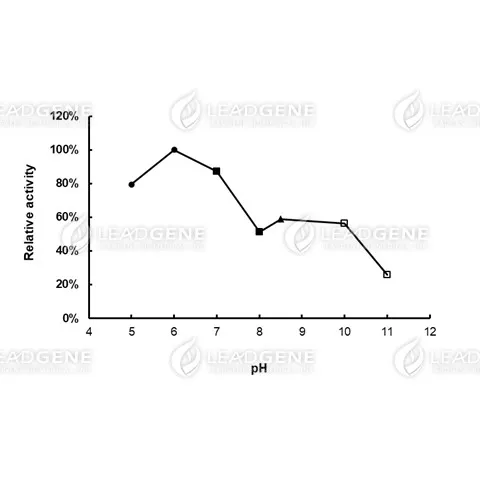
    pH activity of NADH Oxidase. The buffer conditions with various pH values were used in the reaction at 25°C. pH 5.0-6.0, 0.1 M Sodium citrate buffer; pH 7.0-8.0, 0.1 M Potassium phosphate buffer; pH 8.5, 0.1 M Tris-HCl buffer; pH 10.0-11.0, 0.1 M Carbonate-bicarbonate buffer.

    pH activity of NADH Oxidase.
    The buffer conditions with various pH values were used in the reaction at 25°C. pH 5.0-6.0, 0.1 M Sodium citrate buffer; pH 7.0-8.0, 0.1 M Potassium phosphate buffer; pH 8.5, 0.1 M Tris-HCl buffer; pH 10.0-11.0, 0.1 M Carbonate-bicarbonate buffer.

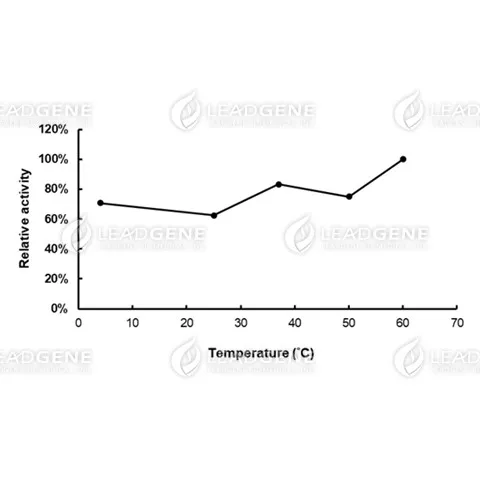
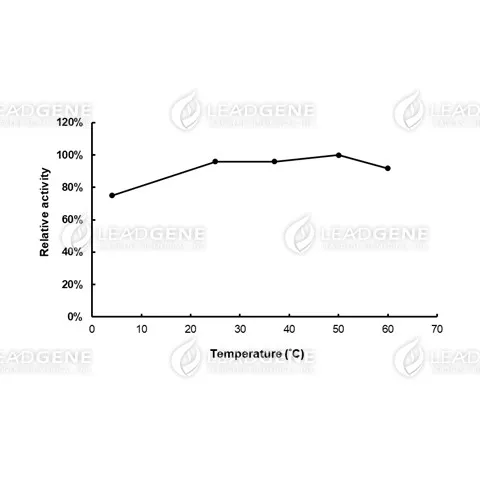
    Temperature activity of NADH Oxidase. The enzyme reactions in 0.2 M Tris-HCl buffer, pH 7.5, were carried out under different temperatures.

    Temperature activity of NADH Oxidase.
    The enzyme reactions in 0.2 M Tris-HCl buffer, pH 7.5, were carried out under different temperatures.

    1
    /
    5
    Total   (5)
  • Review

    Help others learn more about this product. Use the link below to share your experience.

  • Publication

    There are currently no publications. Use the link below to let us know.

  • Datasheet & Documents
    Datasheet
    MSDS
    1
    /
    1

Disclaimer:For Research Use or Further Manufacturing Only.

This site uses cookies as described in our Privacy Policy in order to improve your user experience and deliver customized advertising to you. Click “I Agree” to consent and continue.