




-
Species of Origin
Human
Expression System
HEK293
-
Affinity Tag
His Tag (C-term)
Storage Buffer
Lyophilized from a 0.2 µm filtered solution of PBS, pH 7.4.
-
Purity
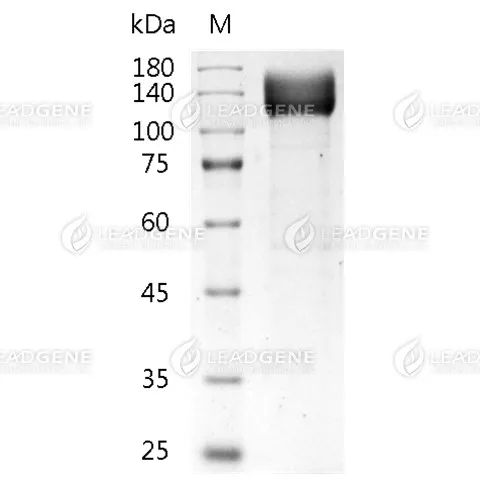
>95% as determined by SDS-PAGE analysis.
Molecular weight
The protein has a calculated MW of 87.08 kDa.
The protein migrates as 120-160 kDa under reducing condition (SDS-PAGE analysis). -
Activity
Measured by its ability to bind human VEGF121 in functional ELISA. Immobilized Recombinant human VEGF121 at 2 μg/mL (100 μL/well) can bind Recombinant Human VEGFR2 Protein.
Endotoxin Level
<0.1 EU per 1 μg of the protein by the LAL method.
-
Form
Lyophilized
-
Specifications
-
Background
-
Background
Human Vascular Endothelial Growth Factor Receptor 2 (VEGFR2), also known as KDR (Kinase Insert Domain Receptor), is a transmembrane receptor protein primarily expressed on endothelial cells. It plays a central role in angiogenesis, the process by which new blood vessels are formed from existing ones. VEGFR2 is activated by binding to its ligands, primarily Vascular Endothelial Growth Factors (VEGFs), initiating signaling cascades that promote endothelial cell proliferation, migration, and survival. This pivotal role in angiogenesis makes VEGFR2 a critical target in various pathological conditions, including cancer, diabetic retinopathy, and age-related macular degeneration. In cancer, overexpression of VEGFR2 is associated with tumor growth, metastasis, and poor prognosis. Consequently, VEGFR2 inhibitors, such as monoclonal antibodies and small molecule tyrosine kinase inhibitors, have been developed as anti-angiogenic therapies to suppress tumor vascularization and inhibit disease progression. Understanding the intricate mechanisms of VEGFR2 signaling offers opportunities for the development of targeted therapies and personalized medicine strategies in angiogenesis-related disorders.
Synonyms
Vascular endothelial growth factor receptor 2, Fetal liver kinase 1 (FLK-1), Kinase insert domain receptor (KDR), Protein-tyrosine kinase receptor flk-1, CD309
-
Uniprot ID
GenBank: AAI31823.1
Sequence Note
Met1-Glu764
-
-
Instruction
-
Reconstitution
It is recommended to reconstitute the lyophilized protein in 4 mM HCl to a concentration of 200 μg/mL and incubate the stock solution for at least 20 min to ensure sufficient re-dissolved.
Shipping
The product is shipped with polar packs. Upon receipt, store it immediately at -20°C or lower for long term storage.
-
Stability & Storage
This product is stable after storage at:
- -20°C for 12 months in lyophilized state from date of receipt.
- -20°C or -80°C for 1 month under sterile conditions after reconstitution.
Avoid repeated freeze/thaw cycles.
-
-
Image
![SDS-PAGE analysis of recombinant Human VEGFR2.]()
SDS-PAGE analysis of recombinant Human VEGFR2.
1/1 -
Review

Help others learn more about this product. Use the link below to share your experience.
-
Publication

There are currently no publications. Use the link below to let us know.
-
Datasheet & Documents
1/1
Disclaimer:For Research Use or Further Manufacturing Only.
Last updated:

