




Economic Daily News | Reported by Chang Chieh (Transliteration).
Translated by Leadgene Biomedical, Inc.
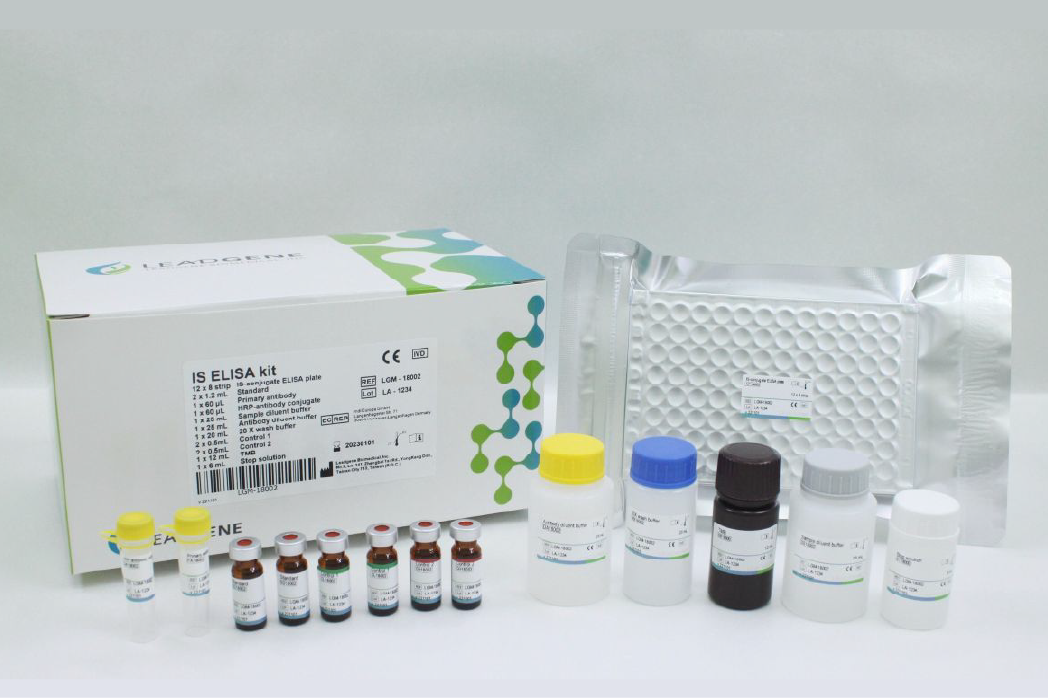
Leadgene Biomedical's world-first Indoxyl Sulfate (IS) ELISA kit demonstrates Taiwan's leadership in the precision management of chronic kidney disease. (Provided by Leadgene Biomedical)
Chronic kidney disease (CKD) is often referred to as a "silent disease" due to its asymptomatic early stages, which can quietly compromise patient health over time. Taiwan faces a disproportionately high prevalence of CKD, with its rate of end-stage renal disease patients requiring hemodialysis ranking among the highest globally. Statistics indicate that approximately 1.5 million adults in Taiwan live with Stage 3 to Stage 5 CKD; however, fewer than 10% are actually aware of their condition. This stark clinical reality underscores a critical imperative in modern nephrology: the development of reliable methods for early identification and precision disease management.
To advance international scholarly exchange and precision management in renal care, Leadgene Biomedical, a leading developer of antibodies and diagnostic technologies, was invited to the 9th Annual Meeting of the Japanese Society for Uremic Toxins (JSUT) in Tokyo this May. During the symposium, Prof. Fang Teh-Chao, a Professor of Nephrology at Taipei Medical University, delivered a keynote address titled "Precision Management of Protein-Bound Uremic Toxins in Chronic Kidney Disease: The Role of Indoxyl Sulfate Monitoring." His presentation highlighted Taiwan's latest breakthroughs in gut-derived uremic toxins and precision diagnostics, drawing significant interest from the international scientific community.
Prof. Fang Teh-Chao noted that conventional clinical assessments of renal function rely heavily on traditional biomarkers such as serum creatinine and estimated glomerular filtration rate (eGFR). However, these metrics are often lagging indicators, showing notable changes only after substantial renal damage has already occurred. Consequently, pioneering ways to identify patient risks at a much earlier stage remains a primary focus and a continuous pursuit for medical researchers worldwide.
Optimizing Renal Healthcare via Gut-Kidney Axis Approaches
In recent years, the concept of the "Gut-Kidney Axis" has gained substantial traction within the medical community. Accumulating research demonstrates that chronic kidney disease is not merely an isolated organ pathology but is intimately linked to gut dysbiosis. An imbalanced intestinal microbiota produces specific metabolites that are subsequently converted into protein-bound uremic toxins (PBUTs), with indoxyl sulfate (IS) recognized as a primaryopathological biomarker. Once IS enters the systemic circulation, it exerts a long-term burden on the body, driving the progression of renal decline and chronic systemic inflammation.
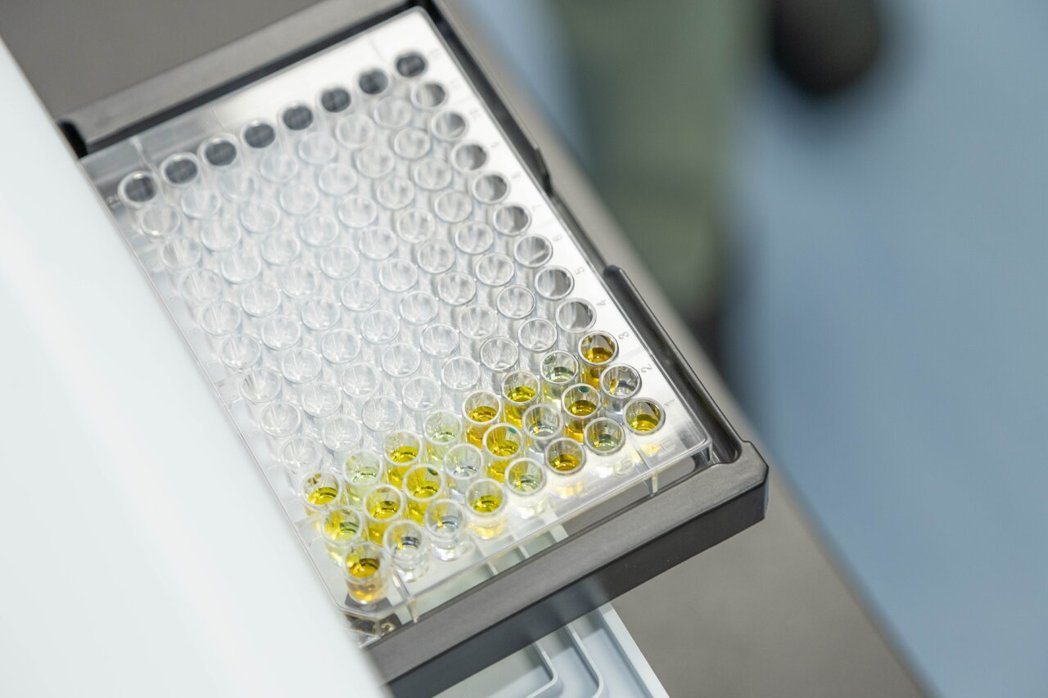
Precision Indoxyl Sulfate (IS) testing serves as a vital adjunct in assessing renal function, bridging the gap left by traditional biomarkers to secure a critical window for early clinical intervention. (Provided by Leadgene Biomedical)
Targeting Indoxyl Sulfate for Early CKD Intervention
Prof. Fang explained that the distinct clinical challenge of indoxyl sulfate lies in its high protein-binding affinity within the bloodstream, making it highly resistant to conventional clearance mechanisms. Over time, its accumulation disrupts renal, cardiovascular, and overall metabolic homeostasis. Clinical evidence shows that IS levels begin a steady ascent as early as Stage 3 CKD. Therefore, utilizing a stable, high-precision assay to continuously track these fluctuations allows clinicians to thoroughly evaluate a patient's comprehensive status and secure a critical window for early therapeutic intervention.
Leadgene Biomedical's indoxyl sulfate testing technology was a major highlight of the conference. Traditional IS testing methods have typically depended on sophisticated analytical instruments and complex laboratory workflows, which limited their adoption in routine clinical practice. Leadgen's novel diagnostic platform drastically optimizes testing efficiency and reproducibility, lowering the barrier for medical and research institutions to track these vital metrics and making routine precision management clinically viable.
Beyond diagnostic technology, management strategies for protein-bound uremic toxins are rapidly evolving toward a multifaceted, integrative approach. Recent clinical research has increasingly focused on interventions such as plant-based dietary fibers, targeted dietary adjustments, microbiome modulation, and specialized nutritional support. Consistently monitoring key biomarkers, coupled with proactive lifestyle and nutritional optimization, forms a comprehensive gut-kidney axis care model that represents the future paradigm of chronic kidney disease management.
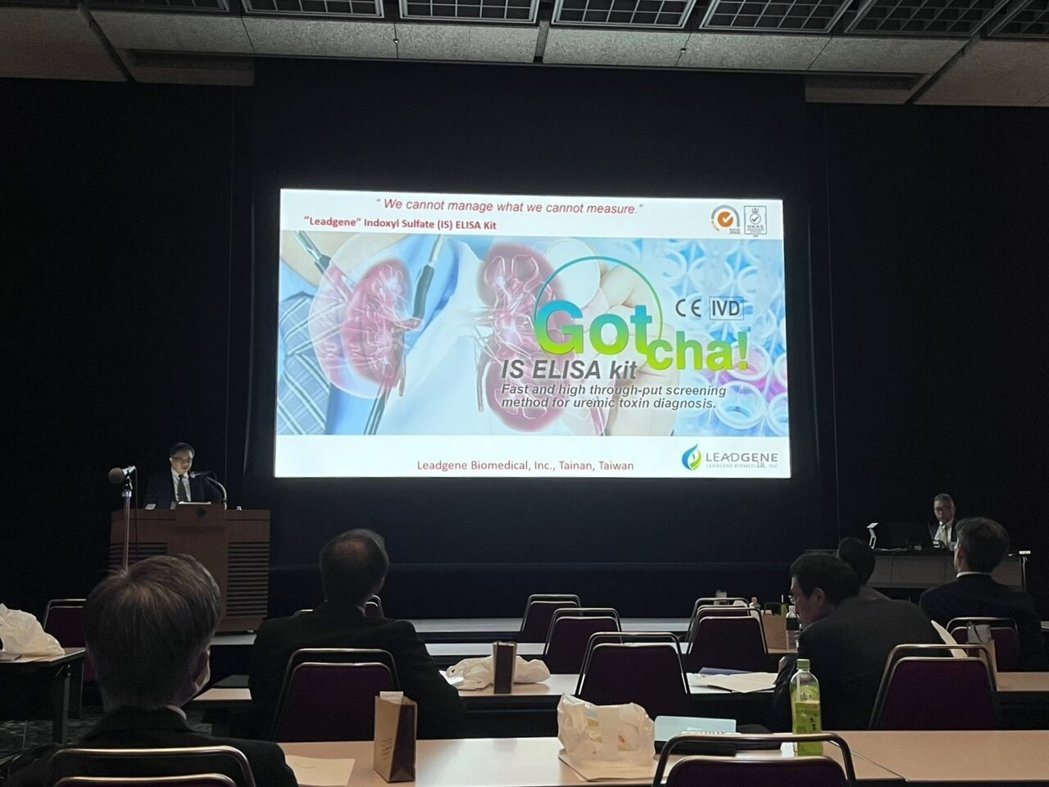
Prof. Fang Teh-Chao sharing research on precision Indoxyl Sulfate (IS) testing at the Japanese Society for Uremic Toxins (JSUT) annual meeting. (Provided by Leadgene Biomedical)
Advancing Global Healthcare Through Future Renal Paradigms
Dr. Yung-Chun Chuang, Chairman of Leadgene Biomedical, stated that the company's participation in the Japan conference not only showcased Taiwan's technological capabilities, but also reflected its growing integration within the global ecosystem of precision chronic kidney disease (CKD) management. He further pointed out that with their diagnostic technologies already expanding into overseas markets, Leadgene is committed to deepening international collaborations to ensure that these pioneering, Taiwan-led R&D breakthroughs deliver meaningful value to healthcare providers and patients worldwide.
From traditional renal biomarkers to the frontiers of the gut-kidney axis and uremic toxin research, the chronic kidney disease care model is steadily moving toward a more nuanced, comprehensive paradigm. As medical technology and diagnostic precision continue to advance, capturing risks at an earlier stage and fostering long-term health management strategies will inevitably become the defining cornerstone of future renal healthcare.
Zuletzt aktualisiert:
