Beschreibung
Interleukin-16 (IL-16), originally identified as lymphocyte chemoattractant factor (LCF), is a multifunctional immunomodulatory cytokine that primarily affects CD4-expressing immune cells. The CD4+ T cells, monocytes, and eosinophils activated by IL-16 migrate into the inflamed tissues and secrete a large number of pro-inflammatory cytokines and cytotoxic effector molecules. IL-16 also promotes the expression of IL-2 receptor (CD25) and MHC class II molecules, while modulating cell cycle progression in lymphocytes. In addition, IL-16 plays an important role in acute inflammatory and allergic responses by recruiting immune cells and stimulating the release of histamine and other inflammatory mediators, thereby causing airway hyperresponsiveness, tissue edema, and other symptoms. In chronic inflammation, prolonged stimulation of IL-16 sustains immune cell infiltration and tissue remodeling, which may contribute to autoimmune pathology and fibrosis. In recent years, it has been found that IL-16 exhibits pleiotropic functions depending on cell types and molecular forms, such as regulating T-cell activation, apoptosis, and cell proliferation. IL-16 is considered to be highly related to innate and adaptive immunity, multiple inflammatory diseases, and tumor progression. Increased levels of IL-16 have also been found in the circulation of patients with systemic lupus erythematosus (SLE), rheumatoid arthritis, asthma, and atopic dermatitis. The level of IL-16 in tumor cells and the microenvironment is related to disease progression and prognosis, and modulation of IL-16 signaling can influence anti-tumor immune responses and therapeutic outcomes.
Testprinzip
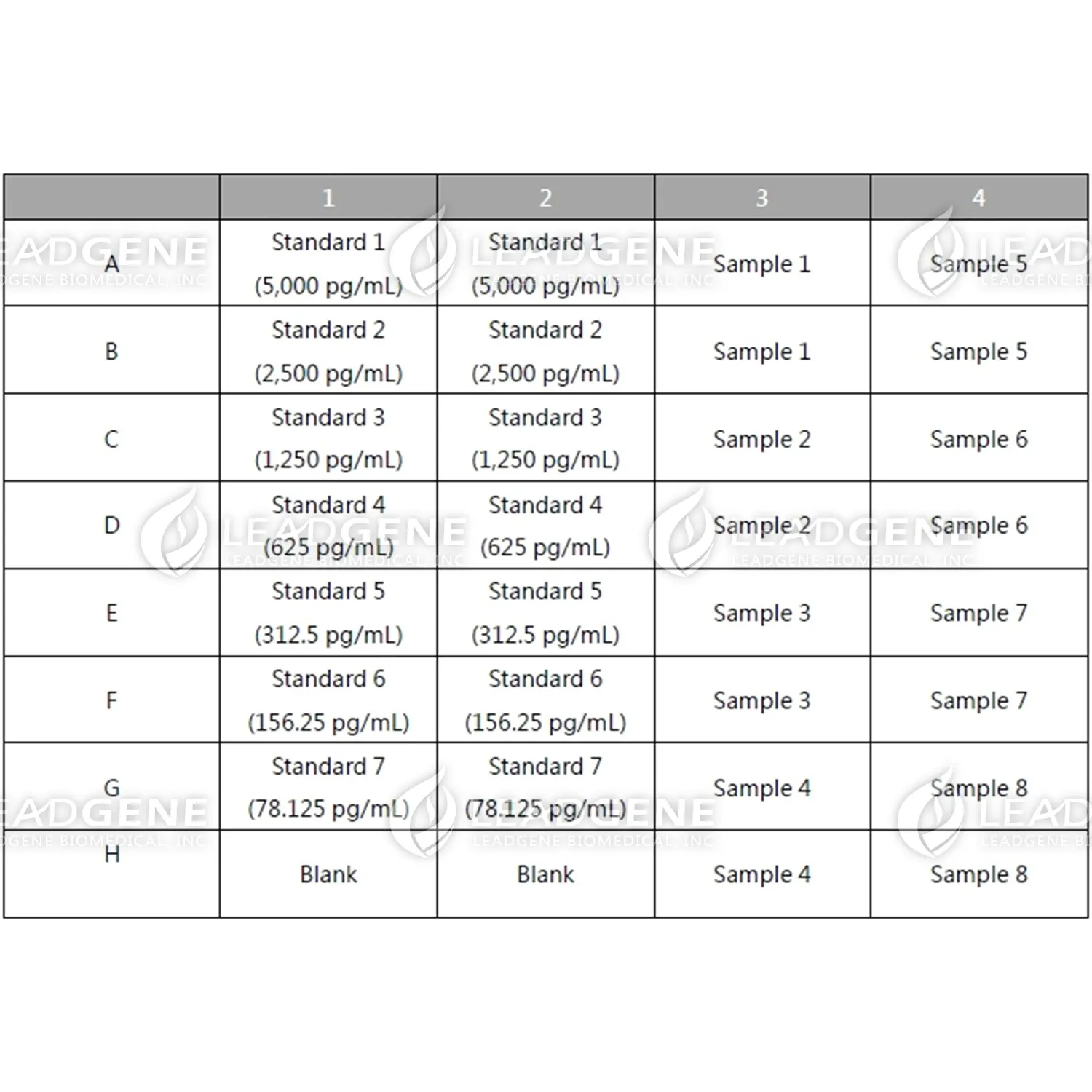
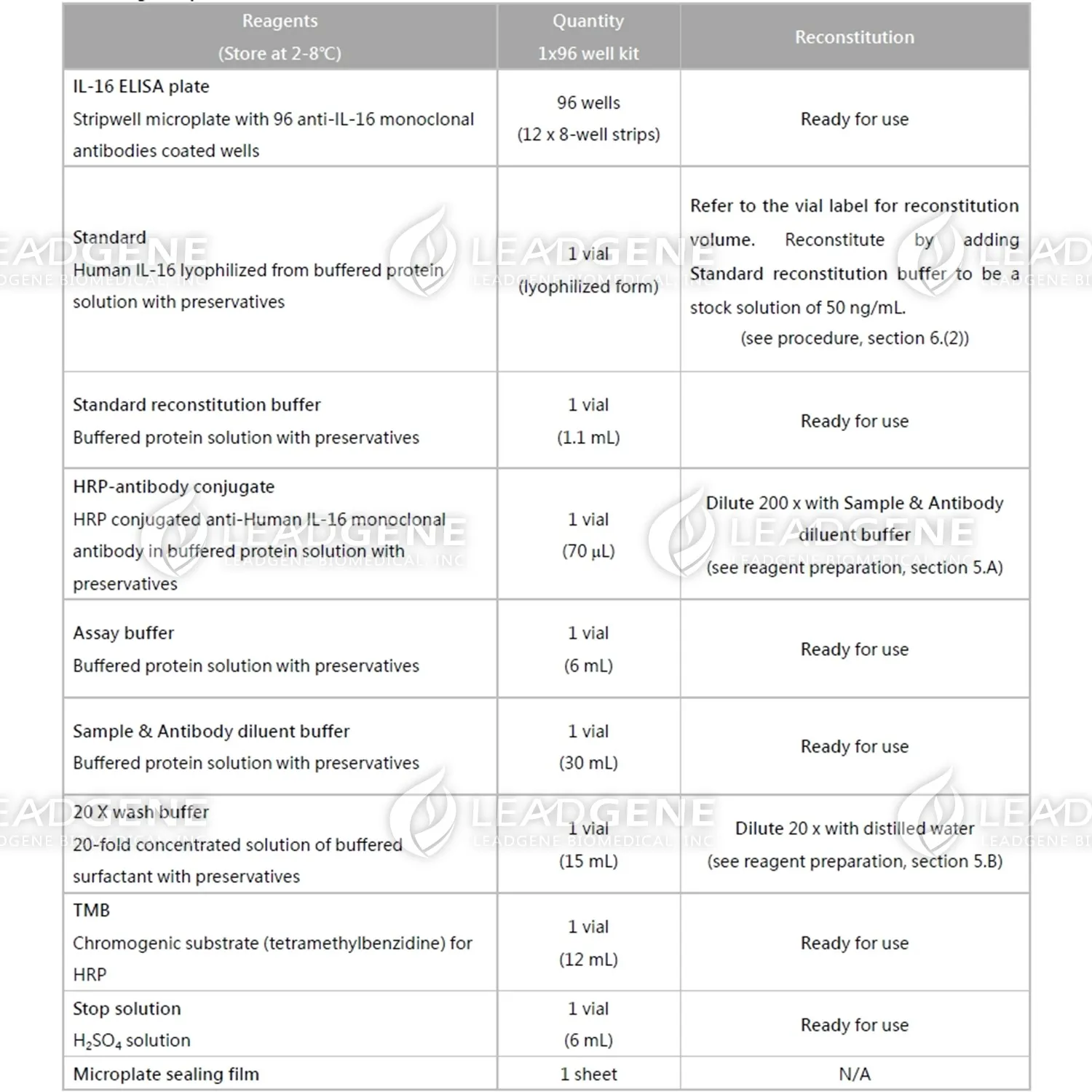
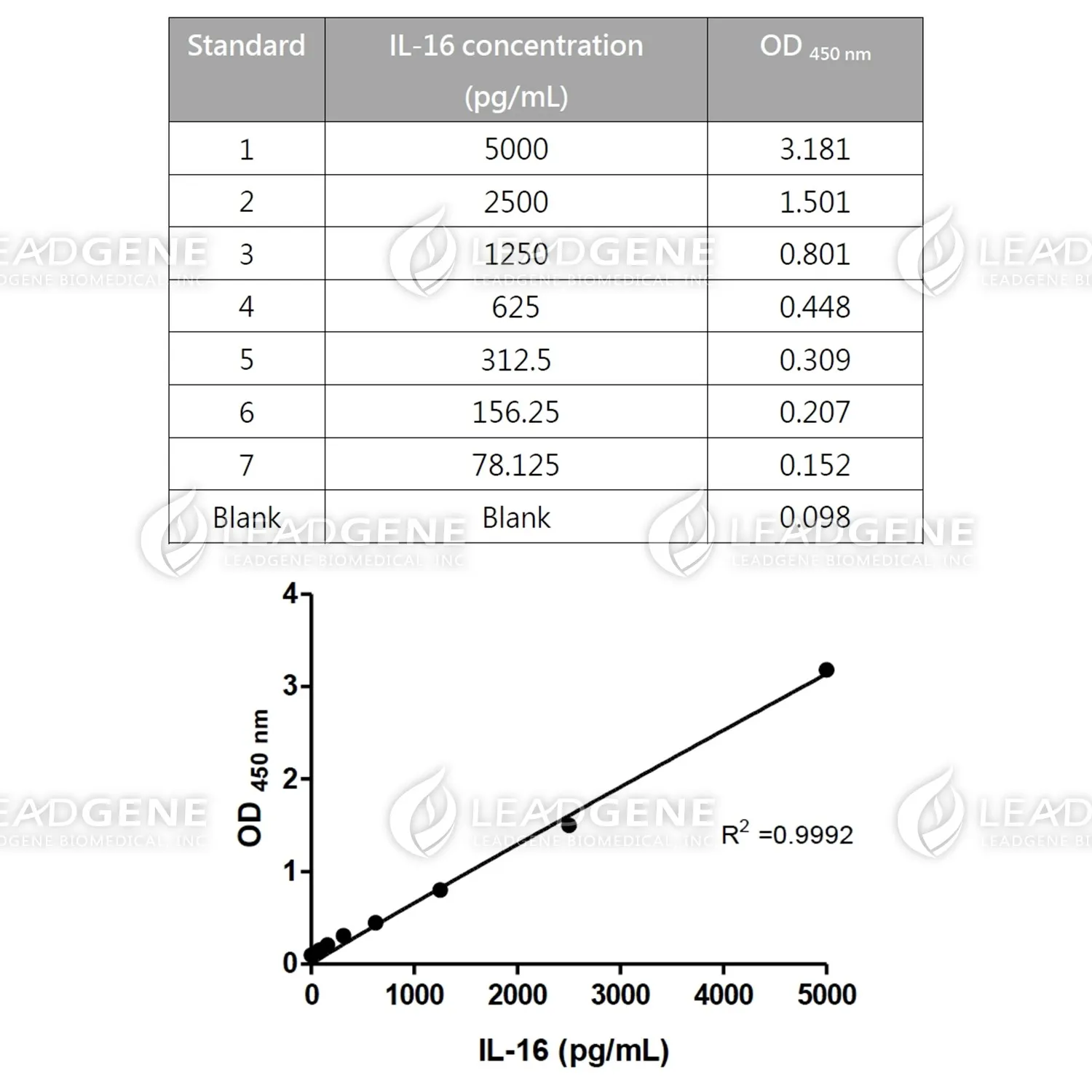
The IL-16 ELISA kit is designed for the quantitative detection of natural and recombinant human IL-16 in serum, plasma, and cell culture supernatants using the sandwich ELISA method. In this assay, a microplate is pre-coated with a mouse anti-IL-16 monoclonal capture antibody. Standards and samples are added to the wells, allowing IL-16 to bind to the immobilized antibody on the solid phase, followed by reaction with an HRP-conjugated mouse anti-IL-16 monoclonal detection antibody. After washing away unbound substances, a substrate solution is added for color development, which is then terminated by a stop solution. The optical density (OD) is measured at 450 nm, and IL-16 concentrations are determined by comparing the sample absorbance against a standard curve.